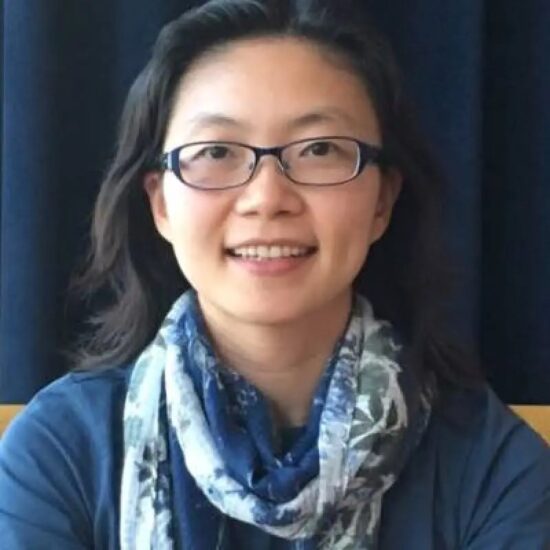
In today’s spotlight, we interviewed Joy Zhang, Professor of Sociology at the University of Kent. As the Responsible Research and Innovation lead for ELEMENTAL, Joy collaborates with all Work Packages to identify gaps and develop strategies to enhance public, industry, and policy understanding of engineering biology’s role in environmental remediation and the promotion of a circular economy. Joy therefore appreciates the Hub’s varied and complex partnerships and the overall value such diversity contributes to its mission.
Joy, please tell us about yourself.
I’m Joy Zhang, Professor of Sociology and Founding Director of the Centre for Global Science and Epistemic Justice at the University of Kent (GSEJ) . I also serve as the Responsible Research and Innovation (RRI) Lead for the ELEMENTAL Hub. My research focuses on the socio-ethical dimensions and governance of cutting-edge life sciences, particularly in relation to their geopolitical implications.
While my primary expertise is in the biomedical sciences, I have also worked on climate politics and environmental movements. This broader perspective informs my interest in ELEMENTAL’s work. Within the Hub, I am particularly interested in enabling critical social uptake: supporting the adoption of technologies where they serve the common good, while ensuring informed and autonomous decision-making about their use.
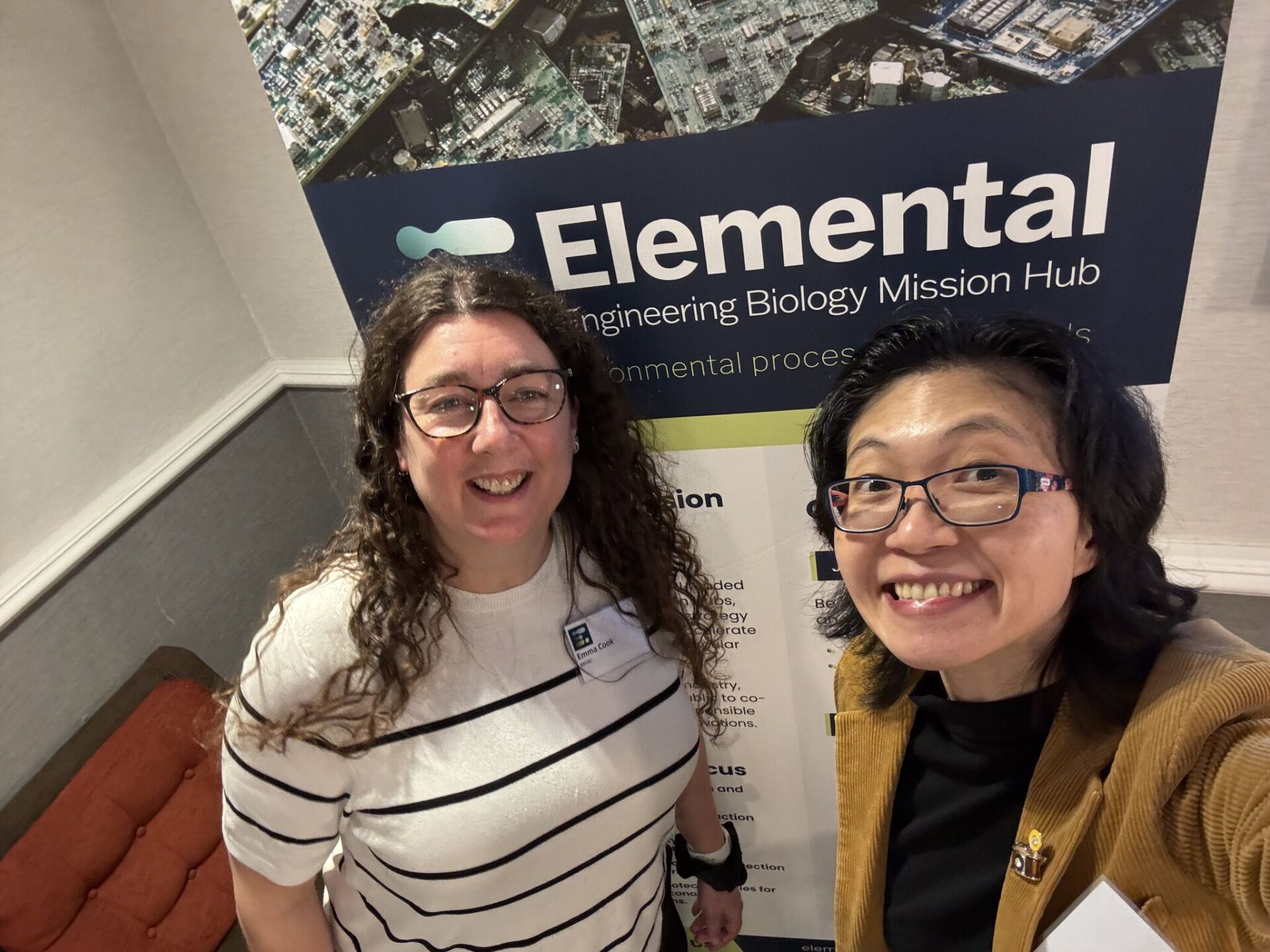
Joy with BBSRC rep Emma Cook at the ELEMENTAL Hub’s Year 2 Annual Meeting in York, where they led a session on Responsibility, Engagement, and Impact in Engineering Biology.
What excites you most about working in the field of engineering biology for environmental impact?
What excites me most—beyond the environmental impact—is the community-building dimension of ELEMENTAL. As a sociologist, I am fascinated by how the Hub brings together a wide range of scientific sub-disciplines and institutions across the country, yet still fosters a strong sense of shared community that transcends institutional, career-stage, and disciplinary boundaries. This is a testament to the care and commitment of the scientific Co-Is, as well as to the collaborative research culture that each work package has helped to cultivate.
This matters especially in fast-moving fields like engineering biology, where formal rules often lag behind innovation. In these spaces, responsible development relies on peer support, shared norms, and a sense of collective responsibility. ELEMENTAL shows how well this can work, and understanding why it works so well could offer valuable lessons for other emerging fields.
Please tell us about any standout collaborations or opportunities you’ve experienced through the Hub.
Over the past year, I set myself the goal of visiting almost all of the partner institutions and speaking with around 30 people across the Hub. These conversations were consistently insightful—and a lot of fun. I really enjoyed spending time in different labs, hearing about colleagues’ ambitions (and the occasional frustrations), and getting a feel for their day-to-day work.
All of this has helped me think more clearly about what makes a research community come together and collaborate well, and, just as importantly, what doesn’t have to perfectly “click” for exploratory and innovative work to thrive.
One of the most rewarding parts has been getting to chat with colleagues, especially early career researchers, who haven’t really come across social science perspectives on science before. I’ve really enjoyed sharing what sociology can bring to the table, and hopefully sparking a bit of curiosity about how these perspectives might complement and enrich their work.
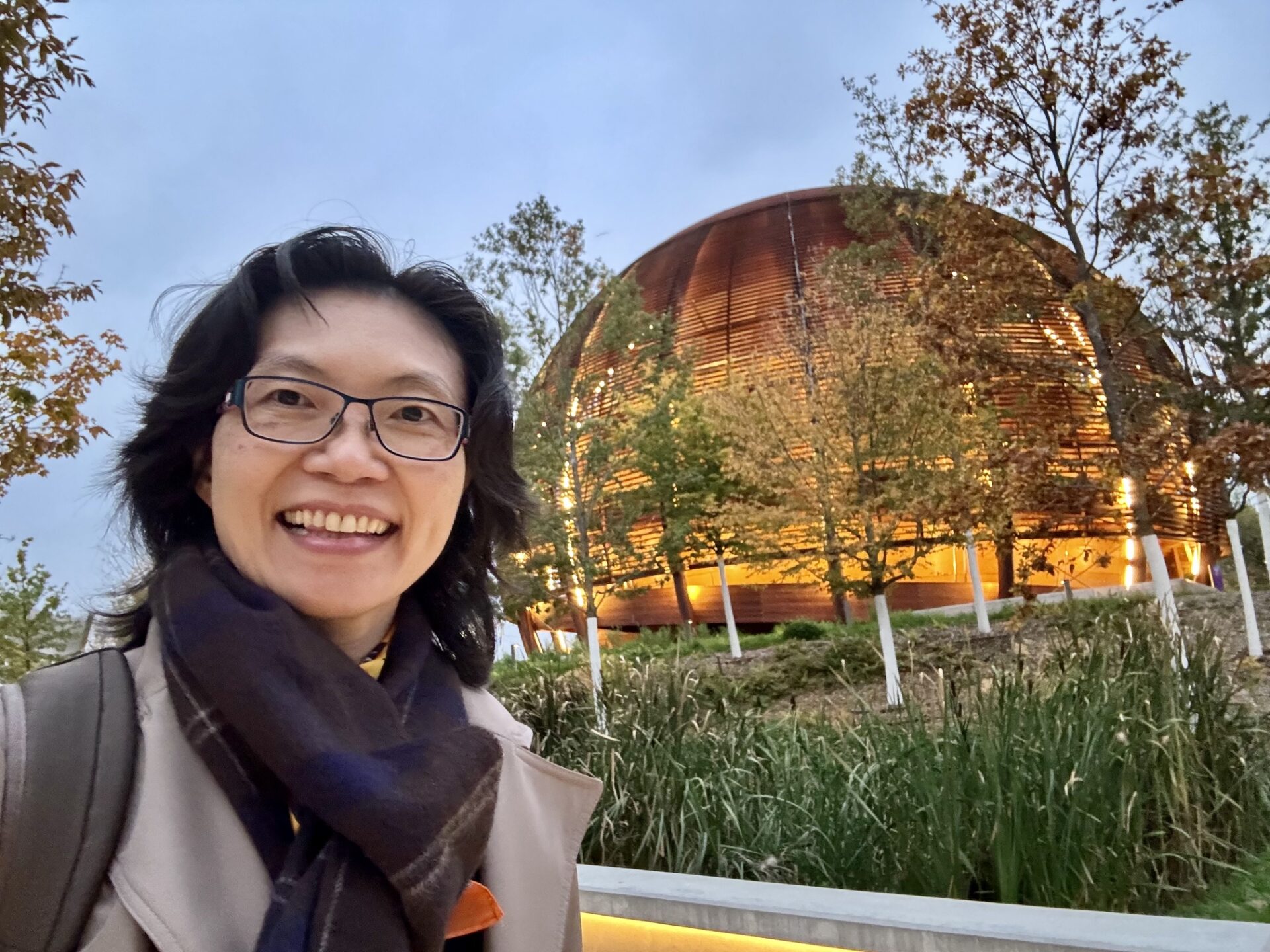
Joy visiting CERN, which stands for “Conseil Européen pour la Recherche Nucléaire,” the French name for the European Council for Nuclear Research, November 2025.
Could you share a recent achievement or milestone, perhaps a publication, presentation, tool development, or outreach, that you’re proud to highlight?
My work on science governance is increasingly shaped by getting out of the office and into real conversations—through science diplomacy and public engagement. At Kent, our centre (GSEJ) has just launched ODESSI, a new programme focused on engaging wider publics with engineering biology while also feeding into policy discussions. It’s been a genuinely collaborative effort, enriched by the insights of colleagues across the ELEMENTAL Hub, as well as the UKRI Engineering Biology Team and BBSRC’s Engagement Office.
The Hub’s UK–US conversations on critical minerals have been especially valuable in bringing these governance questions to life—linking them directly to policy and international collaboration. I’m really delighted to be part of the Hub delegation at the UK–US Symposium on Engineering Biology for Critical Minerals in Washington, DC this June, and look forward to exploring how transatlantic partnerships can help advance new solutions in this space.
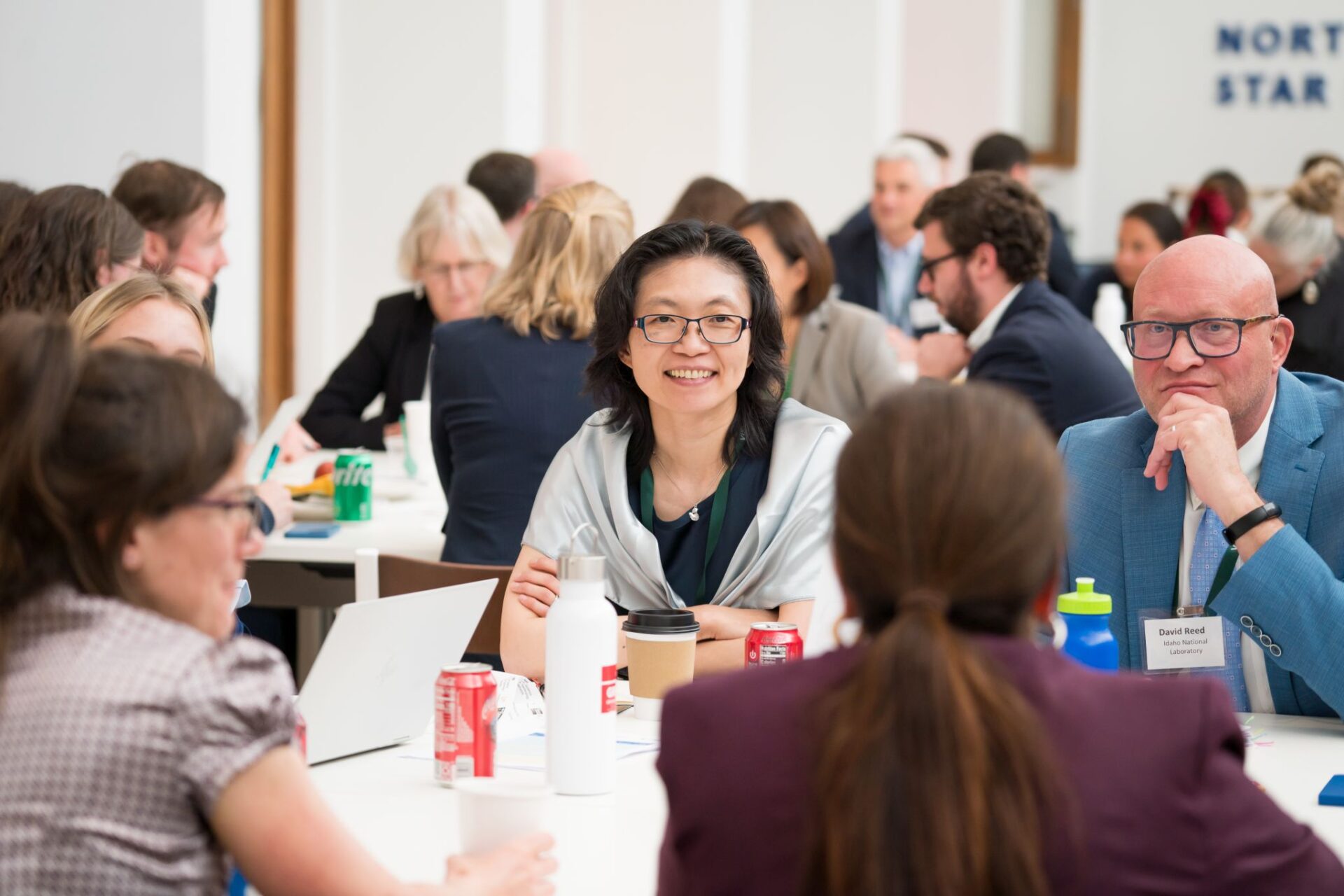
Joy attended the UK-US Symposium on Engineering Biology for Critical Minerals at the British Embassy in Washington DC, June 2026.
What are your hopes or predictions for the future of the ELEMENTAL Hub or the field of environmental biotechnology?
Looking ahead, many of the tools and approaches being developed within ELEMENTAL are transferable. Their impact is likely to extend well beyond the immediate field of metal recovery, offering frameworks and inspiration for other areas of science and innovation. But I also see significant potential for the ELEMENTAL Hub to serve not only as a centre of technical innovation, but also as a model for how emerging fields can be organised responsibly. Its strength lies not just in the science, but in the collaborative culture it has built. I hope this continues to grow, particularly in ways that deepen interdisciplinary exchange, support early career researchers, and expand global engagement.
Please share one fun or unexpected thing about yourself that few people know.
I’m a bit of a LEGO aficionado, and I sometimes use LEGO in my social research. It’s a surprisingly effective way to get people thinking, building, and talking differently about complex ideas—often opening up fresh perspectives on questions that can otherwise feel a bit over-familiar, especially around ethical issues in the life sciences.
Working with colleagues across ELEMENTAL has been genuinely inspiring and a lot of fun. It’s definitely got me wondering whether it’s time to sneak LEGO into a few more conversations. If nothing else, I’d love to tempt more scientists into social science, not just for the insights, but for the chance to get hands-on (quite literally) with some of its more unexpected and inventive approaches.
Joy Zhang’s work demonstrates that the future of engineering biology depends not only on scientific innovation, but also on responsible governance, public engagement, and meaningful collaboration across disciplines. Through her leadership in Responsible Research and Innovation within the Elemental Hub, she is helping to ensure that advances in environmental biotechnology are developed in ways that are inclusive, ethical, and socially impactful. If you’re interested in collaborating with Joy or would like to learn more about her work, click here to connect and explore her research.