Today our Spotlight shines on LanthaGen Bio, a Manchester startup focused on developing sustainable, synthetic biology-based rare earth metal extraction systems. Co-founders Sahara, Dan, and Ellie are using synthetic biology and protein engineering to create new solutions for sustainable recovery of rare earth and critical metals, as well as developing biotechnologies to support a more sustainable transition to the green economy.
During an interview with Dr Sahara Bhanot, we’ve learned much more about LanthaGen Bio and their parallel interests with those of the Elemental Mission Hub.

Co-founders, Dr Sahara Bhanot (CEO), Dan Healy (CTO) and Dr Ellie Goulding (CSO) on the day they were awarded £1.21m in non-dilutive funding from SPRIN-D (photo credit: Felix Adler https://felixadler.com).
Please introduce LanthaGen Bio, including your mission, core areas of work, and the role you play in engineering biology, metal recovery, and the circular economy.
LanthaGen Bio is a Manchester-based biotech startup developing bio-based systems for the extraction and separation of precious and rare earth metals from waste streams such as e-waste and mining tailings. Its mission is to make metal recovery more selective, sustainable, and commercially viable by using proprietary engineered proteins, called Biomagnets, to capture valuable metals from complex feedstocks.
LanthaGen Bio sits at the intersection of engineering biology, critical materials recovery, and the circular economy. The company applies computational-first protein engineering and design to create biological tools that can improve how strategic metals are recovered, separated, and ultimately reused, helping shift the sector away from conventional extractive and solvent-intensive approaches.
About LanthaGen Bio
What technologies are you developing, and which application areas or markets are you focused on?
LanthaGen Bio is currently developing its Biomagnets platform: Biomolecules that selectively bind target metals in solution while allowing unwanted impurities to pass through. The team is also working to broaden the range of metals the platform can recover, moving from an initial focus on lanthanides to additional metals such as gold, platinum, palladium, and cobalt to name a few.
The company is particularly focused on applications in e-waste and mining tailings, where valuable metals are often present in difficult-to-process waste streams. It is also exploring the wider metal extraction value chain, from leaching and separation through to downstream functionalisation of recovered metals for end users.
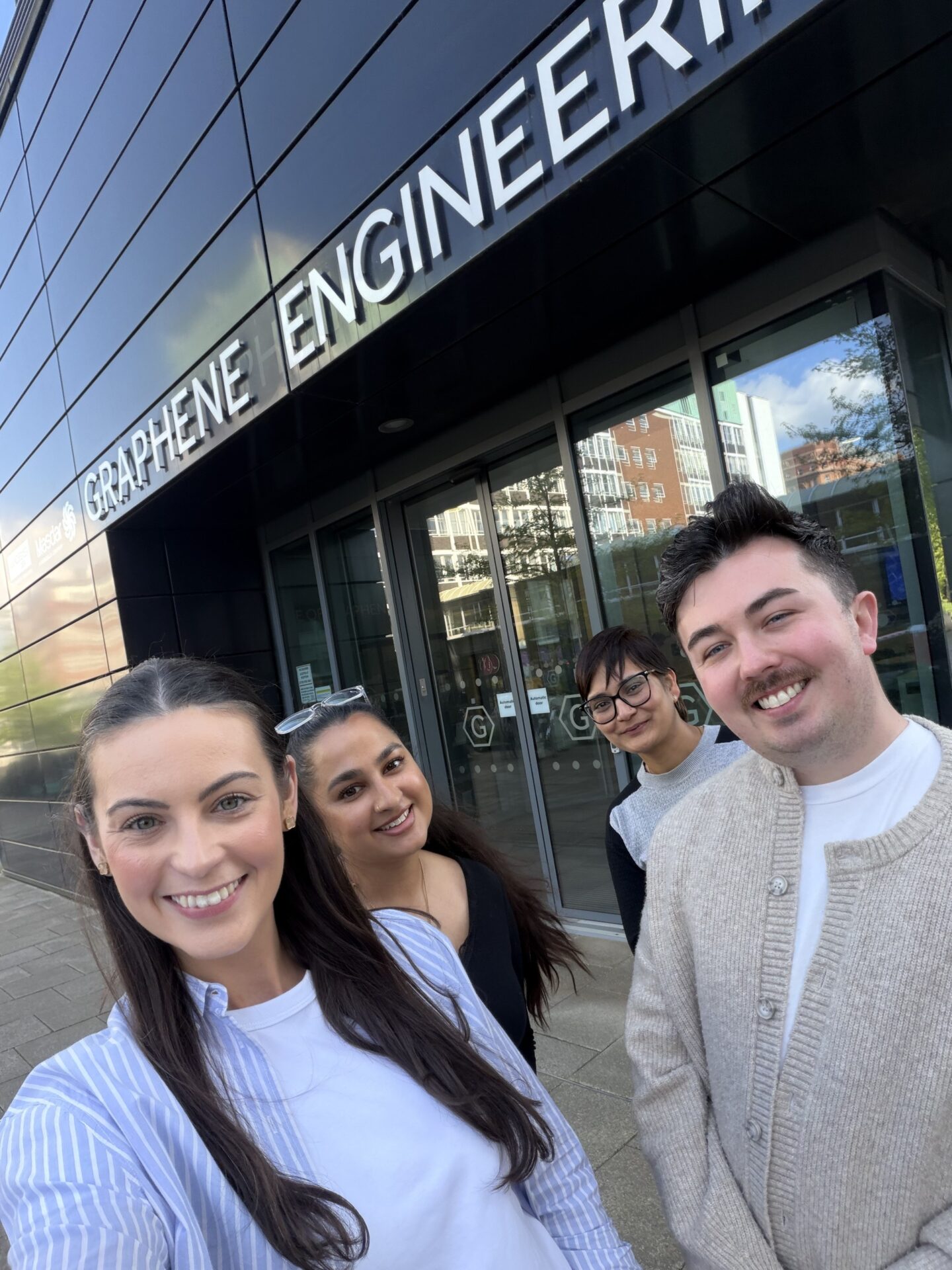
Team LanthaGen’s completion of registration in their new Lab space at the “Graphene Engineering Innovation Centre”. Pioneering the first-of-a-kind biology/chemistry lab in this building.
What are the main challenges facing the business, and where do you see the biggest opportunities for growth?
As an early-stage company, a major challenge is scaling from laboratory validation into relevant industrial environments while continuing to prove our robustness, selectivity, and cost-effectiveness. Like many deep-tech ventures, LanthaGen Bio is also balancing technology development with fundraising, commercial engagement, and the need to build the right partnerships for piloting and scale-up.
The biggest opportunities lie in helping industry recover critical and precious metals from secondary sources more efficiently, especially as supply chain resilience and domestic access to strategic materials become more important. There is also significant growth potential in expanding the Biomagnets platform across multiple metals and application environments, opening up new routes to recovery from low-grade or complex waste streams.
What innovations or trends do you think will have the greatest impact on this field over the next 5–10 years, and how can engineering biology improve conventional approaches?
Biology-enabled separation technologies are especially promising because they offer the potential for far greater selectivity than conventional bulk chemical processes. Computational protein design, paired with circular approaches to resource recovery, could make it possible to tailor extraction systems for a much wider range of metals and waste streams.
Engineering biology can complement conventional metal recovery by introducing molecular-level specificity into extraction and separation steps. In LanthaGen Bio’s case, the goal is to reduce the number of process steps needed to isolate target metals, potentially replacing multi-stage solvent extraction with simpler and more selective biological systems.
What milestones are you working towards, and what are your priorities over the next 3–5 years?
Key milestones include validating the technology in relevant environments, establishing dedicated lab space, growing the internal team, and expanding the company’s Biomagnets portfolio. LanthaGen Bio is also working toward commercial prototype testing, strategic partnerships, and pre-seed investment to support scale-up.
Over the next few years, LanthaGen Bio’s likely priorities are to validate the platform in real operating environments, expand the range of metals addressed, build internal capability, and move toward pilot-scale deployment. Securing pre-seed equity funding and forming commercial partnerships will also be central to that progress.
What kind of long-term impact would you like your work to have?
The long-term ambition is to help make metal recovery cleaner, more selective, and more circular, reducing reliance on virgin extraction while increasing the value recovered from waste. In practical terms, that would mean enabling industry to treat waste streams as valuable resources and demonstrating how engineering biology can contribute to more resilient materials supply chains.
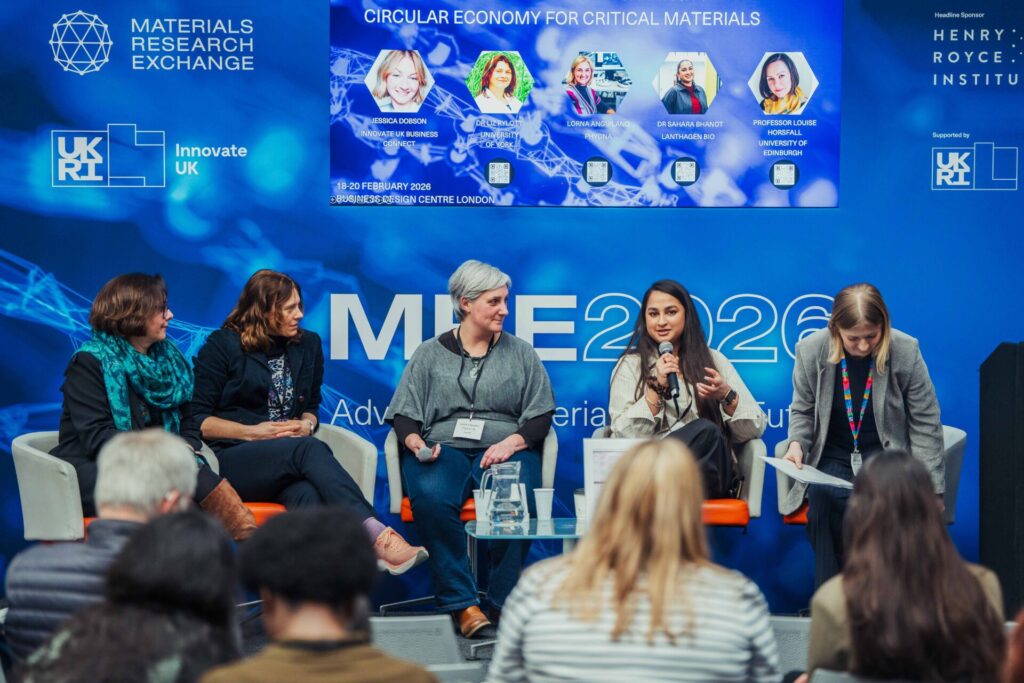
Sahara presenting on stage at MRE2026 on a panel amongst some huge names in metal recovery (fellow ELEMENTAL members) and remediation using biological approaches.
Working with Elemental
What value do you see in being part of the Elemental network, and where could collaboration with other members be most beneficial?
Being part of the Elemental network offers access to a community that understands the technical and commercial realities of building ventures around sustainable materials and bio-based innovation. For a company like LanthaGen Bio, that kind of network can help accelerate learning, visibility, and partnership development at a crucial early stage.
Collaboration would be especially valuable in feedstock access, metal testing, pilot design, process integration, and downstream applications for recovered materials. There is also clear potential to work with partners across academia, industrial waste management, mining, and advanced materials to validate the technology in real-world settings.
What kinds of partnerships or inputs are most valuable to your organisation?
The most valuable inputs are likely to be testing partners, technical collaborators, end users for recovered materials, and investors who understand deep-tech commercialisation. Support with scale-up, process development, and access to representative waste streams would also make a meaningful difference.
Business Interaction Voucher Collaboration
How did your collaboration with your BIV partner come about, and what opportunity were you aiming to address?
The collaboration with Prof Sam Hay developed through shared interests in engineering biology, circular resource recovery, and the need to translate promising technical work into practical industrial opportunities through the Elemental network. Sahara (CEO and co-founder), met Sam many years ago when she was carrying out her MPhil in Manchester Institute of Biotechnology. As the foundations for LanthaGen Bio were built (With Dan Healy and Ellie Goulding, CTO and CSO respectively), Sam played a large role with advice on the computational side, with his previous publications on lanthanide binding proteins.
The project was aimed at advancing a more sustainable and selective route for recovering high-value metals from difficult waste streams, while building the evidence base and partnerships needed for real-world deployment. This aligns closely with LanthaGen Bio’s focus on e-waste, mining tailings, and bio-based metal separation.
What were your objectives at the outset, how have they evolved, and how did Elemental support the collaboration?
The initial objectives were to validate the opportunity, strengthen the technical and commercial case, and identify the best route toward pilot testing and scale-up. As the company has progressed, those objectives have likely evolved toward broader market engagement, integration with industrial partners, and preparation for external investment.
Elemental’s support has helped by creating structured opportunities for collaboration, giving credibility to an emerging partnership, and providing access to funding and relevant network connections. For an early-stage company, that kind of facilitation can materially accelerate progress from concept-stage discussions to practical next steps.
What aspects of the BIV programme were most valuable, and why?
The most valuable aspects are likely the combination of practical support, external validation, and access to a relevant ecosystem of technical stakeholders. Those features are especially important for early-stage deep-tech companies that need both scientific traction and routes into market-facing collaboration. It’s all about collaboration!

Dan and Sahara presenting at the Canadian Embassy, following a successful market discovery trip to Quebec and Montreal.
Meet the Founder
Please tell us about your role and how you came to work in this field.
As CEO and co-founder of LanthaGen Bio, my role involves helping shape the scientific direction of the company while also building the partnerships, funding base, and strategic focus needed to bring the technology into application. The company emerged when the founding team met during their PhDs and postdocs at The University of Manchester, before we decided to apply our expertise to the challenge of critical metal recovery.
What attracted us was the chance to apply engineering biology to a problem with clear industrial and environmental importance. What has kept us engaged is the opportunity to build a platform technology that could improve resource recovery, support circularity, and create real impact across multiple sectors.
What experiences have most shaped your approach, and what do you find most rewarding about working in this space?
The founding team’s academic background in metabolic engineering and related applied bioscience fields appears to have been central in shaping how we approach technology design and problem selection. Our decision to move from more crowded application areas into critical metals was driven by a pragmatic, opportunity-led mindset grounded in both science and market need, an opportunity we spotted by closely tracking the trajectory of geopolitical tensions.
This field brings together fundamental biology, advanced design tools, and urgent industrial challenges in a way that is both technically demanding and highly applied. It is especially rewarding to work on something that could reduce waste, recover valuable materials, and strengthen more sustainable and domestic supply chains.
What has been a particularly meaningful achievement or milestone in your career so far?
For the team, major milestones include proving the feasibility of the technology, securing second place and £75k in the Ideas With Impact competition, and later winning £1.12 million in equity-free investment through SPRIND’s Tech Metal Competition. Those achievements stand out because they combined technical validation with strong external recognition and gave the company a foundation for further growth.
Looking back, is there any advice you would give to someone starting out in this field?
Stay close to real-world problems, and do not be afraid to apply your scientific training in areas outside the most obvious or crowded markets. It also helps to build early conversations with end users and partners, because technical elegance matters most when it solves a genuine need.
What changes would help accelerate progress in this field?
Progress would be accelerated by stronger policy support for critical material recovery, better incentives for circular processing of waste streams, and more pathways for early-stage ventures to access pilot infrastructure and industrial partners. Greater awareness of the value locked in e-waste and mining residues would also help create demand for new recovery technologies.