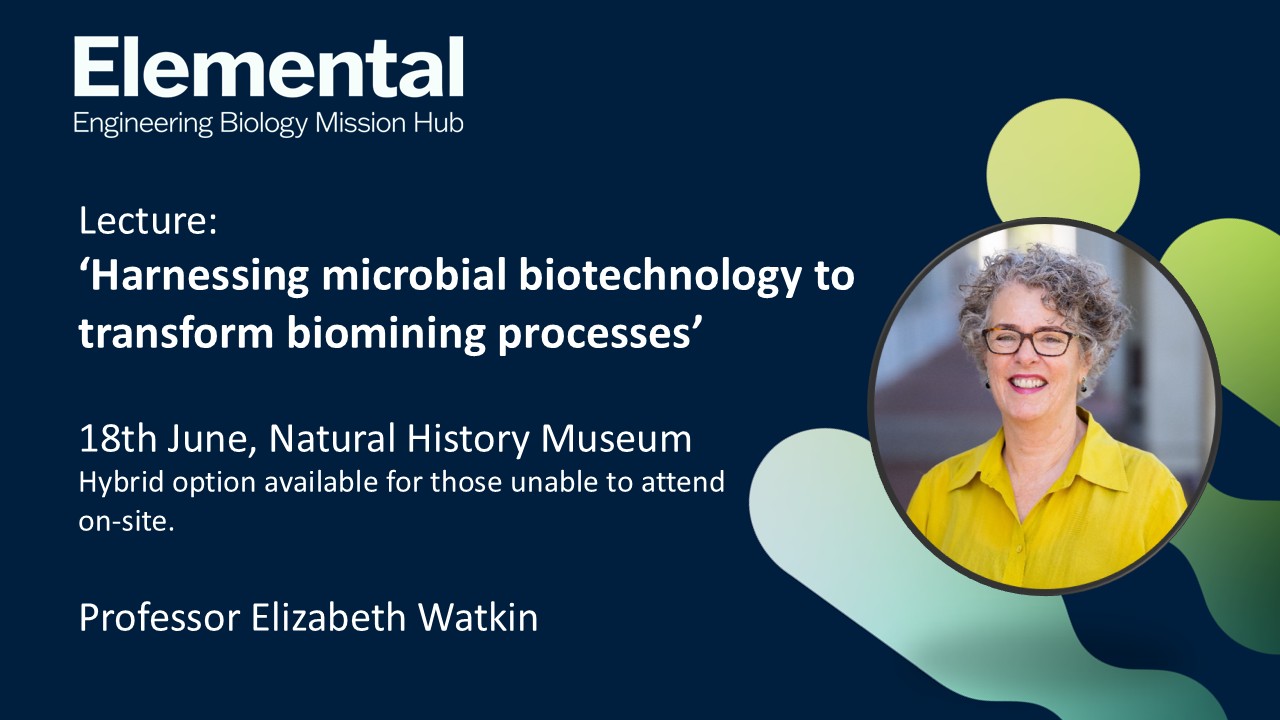
Elemental is pleased to welcome Professor Elizabeth Watkin for an in-person lecture on 18 June 2026, hosted at the Natural History Museum, London. Attendees are warmly encouraged to join us on-site; however, a hybrid option will also be available for those unable to attend on-site.
Growing global demand for critical minerals and the declining grade of accessible ores have intensified the search for more sustainable metal extraction technologies. Bioleaching has emerged as a compelling alternative to energy intensive conventional processes. By enabling extraction under mild conditions, bioleaching offers significant potential for reducing the environmental footprint of mineral recovery.
This presentation examines two potential developments that would address major constraints and opportunities in biomining systems. The first concerns the limited availability of freshwater, a key barrier to largescale bioleaching, particularly in arid mining regions. Recent studies with the halotolerant, acidophilic genus Acidihalobacter demonstrate the feasibility of conducting sulfide mineral bioleaching in saline waters. These iron and sulfuroxidising microorganisms exhibit robust activity in saltrich environments, expanding the operational flexibility of bioleaching processes where freshwater resources are scarce.
The second development involves the microbial recovery of Rare Earth Elements (REEs), which are essential to modern renewable energy and high technology applications. Traditional REE extraction remains complex and resource intensive. Phosphatesolubilising microorganisms provide an alternative pathway, enabling REE mobilisation under environmentally benign conditions. Their use offers a more economically viable and sustainable approach to addressing rapidly increasing global demand for these critical materials.
- Date and time: 18 June 2026 at 12:00
- Location: Natural History Museum, London (in person, with optional online access)
- Register: here.
Meet the Speaker:
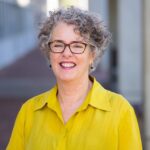 Professor Elizabeth Watkin is a microbiologist in the School of Science at Edith Cowan University (ECU), where she has served as a Professor since 2022. Her career spans more than two decades in environmental microbiology and microbial ecology, with a strong focus on mining biotechnology, mineral resource recovery and bioleaching. Professor Watkin’s research program focuses on biotechnological approaches to environmental and industrial challenges. Her group investigates microbial systems involved in the bioleaching of minerals, with applications in both rare earth element recovery and sustainable mining operations.
Chaired by:
 Dr. Ana Santos is a Research Fellow in Geomicrobiology at the Natural History Museum, London, contributing her expertise in bio-based metal extraction methods (a.k.a. Bioleaching) to the Elemental Hub. Her work focuses on developing and applying microbial processes to extract critical metals from mining and electronic waste streams. As part of the Elemental team, she is advancing innovative bioleaching techniques that enable smarter, more sustainable remining of legacy and urban wastes, transforming environmental liabilities into economic assets. Her research supports the project’s goal of integrating biotechnological solutions into circular economy models for metal extraction and recovery.
- Date and time: 18 June 2026 at 12:00
- Location: Natural History Museum, London (in person, with optional online access)
- Register: here.