Welcome to the first instalment of our Elemental Membership Spotlight series. Today we get to share the story of Dr Giuliano Sting Pechar, a plant biotechnologist and molecular biologist whose work bridges cutting-edge molecular tools with environmental impact.
Working with the Elemental Project from the University of York (under Dr Liz Rylott’s WP5 group), Giuliano brings together expertise in genetic transformation, genome editing, synthetic biology and plant tissue culture. He earned his PhD in Plant Biology & Biotechnology from the University of Murcia in 2022, where he investigated virus resistance in melon by targeting host-factor genes and male sterility. Since then, Giuliano has worked to advance genome editing methods in plants from the Cucurbitaceae and Solanaceae families, including developing tissue selection systems and tissue-specific Cas9 expression setups.
Within Elemental, Giuliano’s research focuses on engineering plant-mediated metal solubilisation in the rhizosphere: using synthetic biology to enhance how plants dissolve and take up metals, improving both phytoremediation and phytomining strategies.
In the interview below, we explore what motivated Giuliano’s journey, the technical and scientific challenges he faces, and his vision for using engineered plants in environmental recovery.
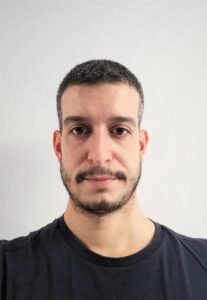
Q: To start, could you introduce yourself and tell us a bit about your role within the ELEMENTAL Hub?
I am Giuliano Sting Pechar, a plant biotechnologist and molecular biologist with expertise in plant tissue culture, genetic transformation, genome editing and synthetic biology. I work as a Research Associate at the University of York. As part of the Elemental Project, I apply synthetic biology approaches to engineer plant-mediated metal solubilisation in the rhizosphere, aiming to enhance the natural capabilities of plants involved in metal recovery processes. These strategies include the engineering and genome editing of plant biosynthetic pathways in Arabidopsis to study metal solubilisation and uptake mechanisms, and the optimisation of Agrobacterium-mediated genetic transformation of high biomass plant species to be used in combined phytoremediation and phytomining strategies.
Q: What first inspired you to pursue environmental biotechnology and metal bioprocessing?
I find it particularly inspiring to be able to apply my passion for plant genetic engineering to solving real problems such as the decontamination of soil contaminated by heavy metals. This applied and environmentally safeguarding approach can help break down prejudices about the acceptance of genetic editing technologies, clearly demonstrating an effective and ethical method of application.
Q: How has being part of the ELEMENTAL Hub shaped your research and collaborations?
This is my first time working as part of a hub, and so far, the experience has definitely been positive. I work mainly with plants, and thanks to the numerous participants in the hub, I have been able to greatly expand my vision of environmental biotechnology carried out by microorganisms. In addition to this, I have been able to participate in several hub events, thanks to which I have been able to strengthen professional and personal relationships.
Q: Can you share a standout collaboration or opportunity that has come through the Hub?
Liz Rylott and I have just applied for Marie Curie Postdoctoral funding to carry out a project on phytoremediation of radionuclides, in which John Loyd and Natalie Byrd from the University of Manchester, who are also participating in the Elemental Hub, are listed as associated partners. The project offers a solution for the sustainable decontamination of radioactive elements and is an example of how hubs provide opportunities to expand the range of collaboration for young researchers.
Q: What keeps you motivated in your day-to-day research?
What guides me in my daily life is a great curiosity, along with a deep love for nature and its underlying biological processes. I consider it a privilege to be able to work in a laboratory, a place full of tools with which to experiment and satisfy my curiosity. Of course, no less important is the idea that what we aim to do is develop safer and more environmentally friendly solutions to the real challenges facing our civilisation.
Q: Looking ahead, what are your hopes for the ELEMENTAL Hub and the broader field of environmental biotechnology?
My hope is that the field of environmental biotechnology can set an example and pave the way for a more ethical application of biotechnology to real problems. It is an opportunity to show that technology does not always have to bow to market forces, but that real applications can be offered, with immediately perceptible benefits for public opinion. Regarding plant biotechnology, engineering phytoremediation can be an example of the virtuous application of new genetic editing techniques to environmental remediation projects.
Q: Tell us something fun or unexpected about yourself outside of the lab.
I have a great passion for trains, both real and model. Together with my brother, I own a large collection of electric models, to which I would like to devote much more time than I am able to.
Q: If your research had a “superpower,” what would it be and why?
It would definitely be the power to genetically transform any plant species. Recalcitrance to genetic transformation is a huge limitation to the development of genetic engineering in plants that we have been carrying with us for too long.
Thank you to Giuliano for sharing his time, insights, and passion with us in this spotlight. We look forward to seeing how his work continues to advance the ELEMENTAL Hub’s mission and inspire the wider field of environmental biotechnology. If you are interested in collaborating with Giuliano or would like to learn more about his work, click here to connect and explore his research.