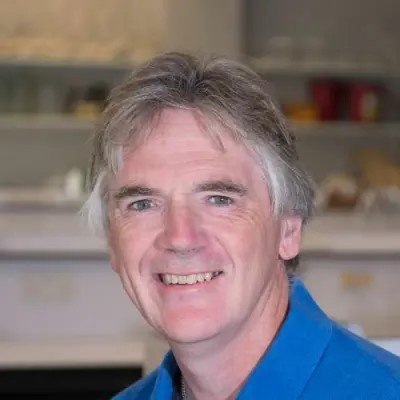
Professor Martin Warren
Lead PI, WP3 Lead, Chair, Management Team
University of Kent and Quadram Institute Bioscience
About
Warren’s research envelops areas of chemistry, biology and history. His interests are firmly embedded in the biosynthesis and biology of the pigments of life, encompassing molecules such as heme, chlorophyll, vitamin B12, siroheme, coenzyme F430 and heme d1.
With Dr Evelyne Deery he was one of the first to use synthetic biology as a means to probe biosynthetic pathways through the reconstruction of the whole cobalamin (vitamin B12) pathway in E. coli, an organism that does not possess the ability to make this molecule de novo. More recently he has elucidated a novel alternative heme biosynthesis pathway that is present in both archaea and sulphate reducing bacteria, where siroheme is hijacked as a substrate – a rare example of where one prosthetic group is cannibalised for the synthesis of another.
His interest in vitamin B12 chemistry led to a study of how cobalamin is used for propanediol utilisation (pdu) in some bacteria, where remarkably the metabolic process is sequestered within a proteinaceous organelle called a bacterial micrcompartment, one of the largest protein-based complexes found in nature. Here, again, the entire pdu operon was cloned into E. coli and shown to orchestrate the construction of functional recombinant pdu microcompartments. Subsequently, empty organelles have been engineered through the targeting of new proteins and processes to these bodies.
View Martin’s Quadram and University of Kent profiles
Last updated 8 September 2025