Engineering biology scale-up for a circular minerals economy
For researchers and companies developing biological approaches to metal recovery, critical minerals and circular materials, designing for scale-up from the outset is essential. In this Member Spotlight, Dr Jude Huggan, Business Development Manager for CPI, discusses the Centre’s role in translating emerging technologies into commercially relevant processes, the importance of considering downstream processing and process economics early, and how its facilities and expertise can support organisations across the Elemental network.
About CPI and engineering biology
Could you introduce CPI, explain where engineering biology fits within its wider capabilities, and describe the organisations and technologies you support?
CPI, The Centre for Process Innovation, is a not-for-profit business that supports organisations to develop new products and processes. Since its inception in 2004, CPI has built 5 open-access facilities equipped with state-of-the-art equipment and supported by a team of industrially experienced experts to help organisations de-risk and accelerate their innovations across multiple markets.
Engineering Biology (EB) sits right at the heart of CPI’s capabilities. As an enabling technology, EB has the potential to impact multiple market areas. CPI supports technologies such as precision, biomass and gas fermentation as well as plant and mammalian cell culture and molecular farming. Key market areas for our biotechnology business include food, feed and nutraceuticals, agritech (biopesticides/biofertilisers), sustainable materials and fossil-free chemicals.
What engineering biology and bioprocessing capabilities does CPI offer, and when should organisations begin thinking about scale-up?
At CPI’s advanced processing and biotechnology facility on Teesside, we support companies from host-strain development, through process development and operation at commercially relevant scale, including:
- Strain development & optimisation
- Upstream development
- Downstream processing
- Process engineering
- Process development & scale-up
- Bio-Manufacturing
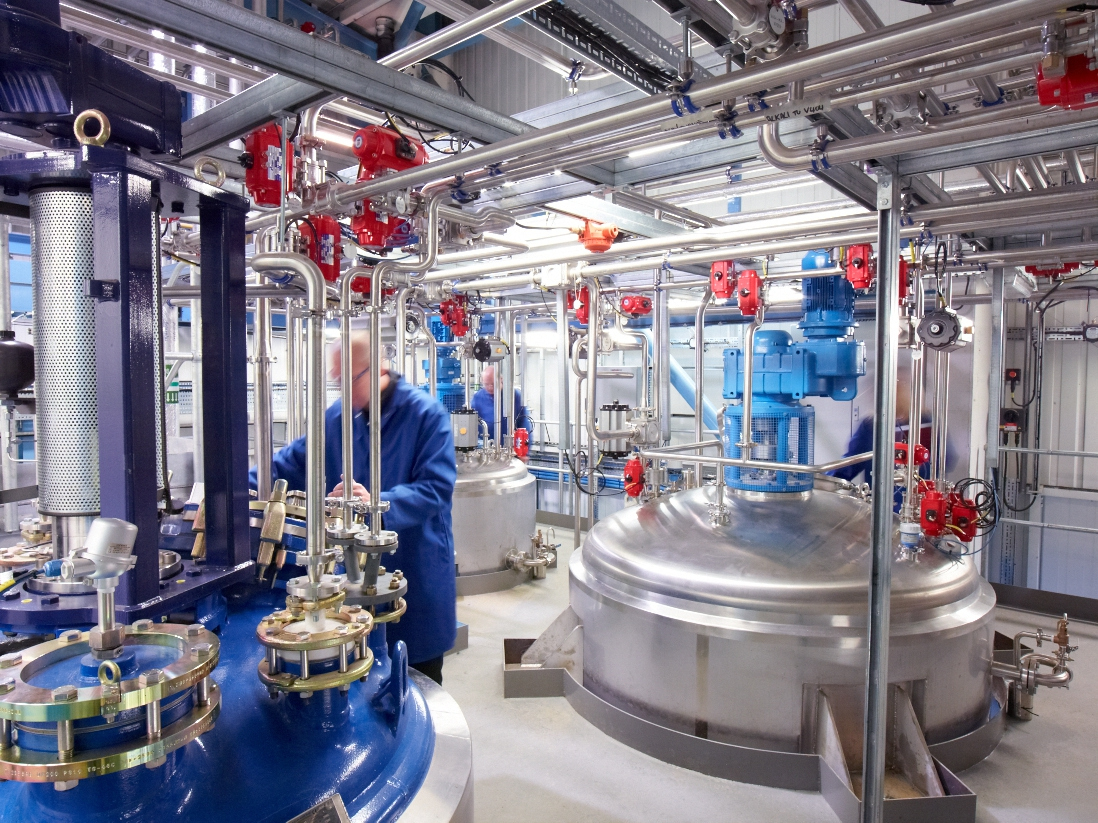
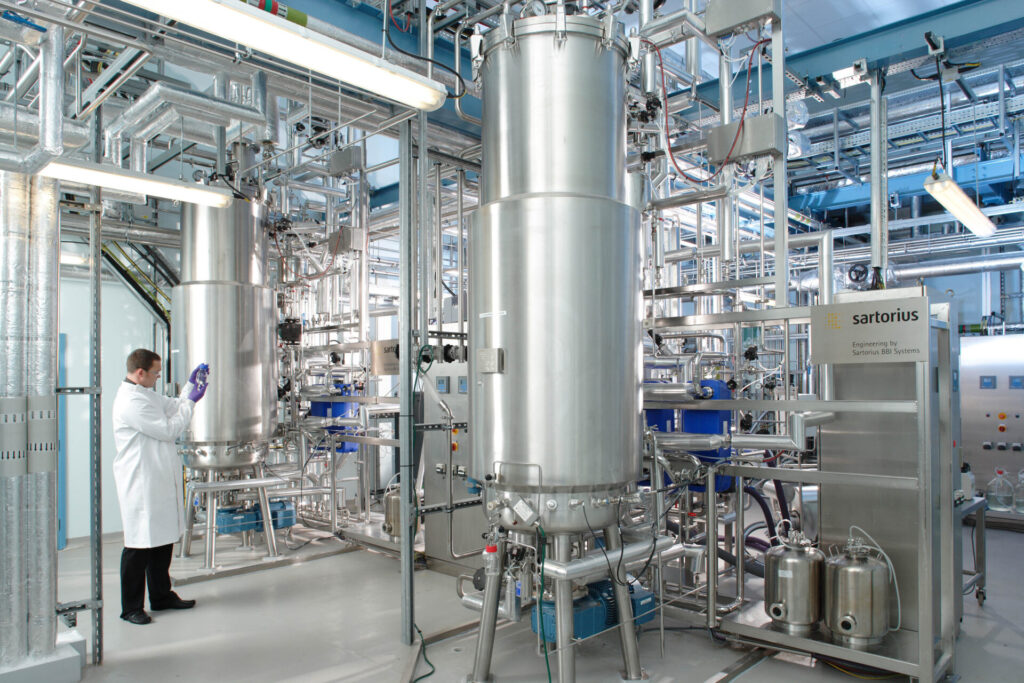
Our Teesside facilities span small scale, high-throughput systems (<200mL), through to lab (1-70L), pilot (100-1000L) and demonstration (10,000L). Our capabilities include: precision and biomass fermentation, gas fermentation, plant cell culture and molecular farming, and we have a wealth of experience working with bacterial, yeasts, fungi, algae, plant and mammalian cells. CPI also has expertise in traditional chemical processing, formulation and process engineering which complements our capability in EB. In addition, CPI’s National Formulation Centre is key to supporting the formulation and stabilisation of products generated using engineering biology.
The earlier the better! Our best piece of advice is to start with the end in mind. Understanding the end goal will direct all early-stage activities. Recognising that the end-goal can change multiple times across a scale up journey is key. Typically, the best time to engage with CPI, or similar organisations, is at the idea stage or very early lab-scale.
Designing for scale-up
What changes when an engineering biology process moves beyond the laboratory, and how can scale-down models help anticipate those challenges?
People think the biggest issue when scaling up is going from 10L to 10000L – it isn’t. The biggest jump is going from 1L in the lab to 10L on plant. In the lab, a scientist would typically run the process but when you move on plant, a process operator will run the process. This is the first big test of process robustness – can someone else take the process and see similar or improved results. Common changes from flask to larger scale equipment centres around mass and heat transfer, mixing and hydrodynamics, shear dynamics and sensitivity. Some of these you just don’t see until you scale up. Other factors to consider include bioreactor geometry and design as well as process control and monitoring.
These all help greatly to de-risk scale up. At CPI, our small-scale reactors are modelled onto the 1000L and 10,000L systems so we’re confident that if we see a behaviour at 10L, we’ll see it in the larger systems. At CPI, our first step would be to validate what a customer has done before. This ensures that we are seeing similar results before scaling but also ensures that CPI has an understanding of how a process will behave at large scale. Typically, we wouldn’t take on a project without a scale down of both the upstream and downstream processes as the cost of failure at large scale is too great not to do this re-risking step, especially if it’s the first time at scale.
What should organisations consider when developing biological processes for complex feedstocks, and how can the biological step be integrated into a complete industrial process?
Biology loves homogeneity! If possible, having well characterised feedstocks is key. The more you know about the feedstock, the more you can prepare a better route to scale up. For example, you may have to undertake pre-processing steps to ensure feedstock homogeneity or you may have to remove a particular element of your feedstock that you know is likely to be detrimental to your biological process.
Again, this comes back to understanding why you’re doing what you’re doing and what you want the end goal to be. Understanding yield, purity and regulatory constraints is good to know up front as well as what the other processing steps are. Rarely does CPI work on stand-alone processes – some processes need further refining to go into a secondary process – this is where downstream processing is key.
How important is downstream processing from the beginning, and how can CPI help identify technical or economic bottlenecks?
Although DSP accounts for between 40-70% of total production costs in precision fermentation, in many cases DSP is an afterthought. This is a mistake!! DSP should be considered from the start and your process designed around the most economic DSP. Considering DSP at the beginning of your process is a MUST.
Come and chat to us! We’re happy to sit down and review process information provided by researchers and companies and to highlight where we’ve seen common technical and economic mistakes, so that researchers and companies are aware of the pitfalls.
What commonly prevents promising technologies from progressing beyond laboratory scale, and what distinguishes teams that successfully reach pilot and demonstration scale?
Funding is an issue for many organisations. Having access to funding that enables you to progress activities is something that many organisations struggle with.
Organisations which focus on one activity whilst seeing the bigger picture tend to succeed over organisations which try to do lots of different activities at the same time. Having an experienced team comprised of people who have diverse experience in scaling technologies and business is key. These people have already made mistakes and can pass across the learning from those experiences.
What role do pilot and demonstration facilities play, and where do you see the biggest gaps between research and commercial deployment?
These are crucial. Not only for technology de-risking but to demonstrate process robustness and that others can run the process.
Between research/early-stage companies and pilot. I think too few people who are developing new processes have an understanding of how long it takes or how much it costs to develop a process. Too often we’ve seen processes that have been years in the making, but when they get to CPI they haven’t been developed with scale up in mind, so we have to go back to the beginning and help design a scalable process. Engage early! You don’t want to waste time, money and effort on the wrong path. What is the minimum viable product at each stage which will allow you to progress.
From feedstock to commercial process
What support can CPI provide to academic groups, and what information is useful before approaching you?
Support doesn’t just have to be lab-based. CPI’s expert staff can provide desk-based support to help assess market opportunity, competitor analysis, technoeconomics and scalability of processes; understanding whether your process is likely to be economically viable is one of the first things to assess before embarking on further scale up. If your process is unlikely to make money at lab scale, it’s unlikely to be economically viable at larger scale. We can also provide academic groups with in-kind support which may take the form of regular meetings with our experts to help guide the development and scale-up of their processes.
Understanding what’s been carried out so far is key; what scale are you at, how many times have you run the process, what the OD and productivity look like, what the DSP route is, are all helpful starting points. Understanding why you’re scaling and what is the current end goal both technically and commercially is always helpful. If researchers/companies have this information, then great but they can still chat to us without this. Also, what are your current objectives in the overall scheme of things?
How can CPI help companies de-risk scale-up, and what expertise can it provide beyond access to equipment?
In all the ways listed above – understanding the process economics is key. If the process isn’t currently economic, then understand how the process needs to change to become economic.
CPI has a strong process engineering team, offering guidance on process economics, process engineering and design of pilot plants. Across our lab, pilot and demo teams technology transfer is a critical step – we involved researchers/companies in this process as they know the process better than us at this point. Commercial readiness is about so much more than the technology being mature, it’s also about having the right team in place, raising investment, protecting IP, having the right go to market strategy and execution plan. Remember – the scale up journey isn’t linear – you’ll take more steps back as you do moving forward.
Does a technology need to have reached a particular TRL before CPI can become involved, and what makes a project well suited to working with CPI?
CPI works with organisations from low TRL, so you don’t have to have reached a particular TRL before we become involved. CPI works both on a commercial, fee for service basis as well as on a CR&D basis. We find most of our early-stage customers, who perhaps haven’t secured external funding, opt to go down the CR&D route.
We’ve carried out >1500 projects, no two of which have been the same. We’re happy to work with whoever needs support and as long as we help the organisation to advance their project, we’ve done a good job.
Collaboration and commercial readiness
Where do you see the strongest opportunities for collaboration between CPI and Elemental, and how could combining the two organisations’ capabilities accelerate deployment?
I envisage this across process development (including assessing economic viability), scale up and biomanufacturing.
CPI has expertise in a wide range of analytical, and separation techniques as well as biomanufacturing scale up. Organisations who work with CPI can use our combined expertise to de-risk and accelerate their process development and deployment journey much quicker than without CPI.
Are there particular capabilities or challenges where CPI would especially welcome conversations with Elemental members?
It’s easy to think the job is done when you recover a nice white powder from your fermentation/DSP project. Another big challenge is formulating that into an appropriate format for a real-world application and getting it to exert the desired effect. CPI houses the UK’s National Formulation Centre where we support the development of a range of formulation activities for liquid and solid products – it’s important for a product to do the correct thing, at the right time and in the right place – formulation is the key to that.
Looking ahead
Where do you see the greatest opportunities for engineering biology in critical mineral recovery, processing and circular materials, and what role can CPI play?
We’re just scratching the surface of our understanding of where EB can take us. Circularity is going to be key for EB in this sector, so linking supply chains that benefit critical mineral recovery and re-use is a priority.
They are interconnected. You can’t have security of supply for key supply chains without the means to develop and scale them.

For further information about CPI’s capabilities and opportunities for collaboration, please contact [Dr Jude Huggan, Business Development Manager, Biotechnology, CPI], who will be happy to discuss potential areas of interest and answer any questions.
————————————————————————————————————-
Related Event- Engineering Biology Scale-Up: Elemental Member Event at CPI
Elemental members are invited to join CPI for an exclusive event exploring one of engineering biology’s biggest challenges: moving promising laboratory results towards practical, scalable solutions.
The event will include expert talks and a tour of CPI’s lab-scale, DSP lab suite, pilot-scale and demonstration facilities. Attendees will hear about the opportunities, challenges and infrastructure needed for successful scale-up, including:
- Lab- and pilot-scale validation
- Robust technical and safety data
- More confident, lower-risk scale-up decisions
- Faster progress towards commercial readiness
For researchers and companies developing biological approaches to metal recovery, critical minerals and circular materials, the event will provide an opportunity to learn more about CPI’s facilities, expertise and approach to de-risking the journey from laboratory research to commercial deployment. Register here.