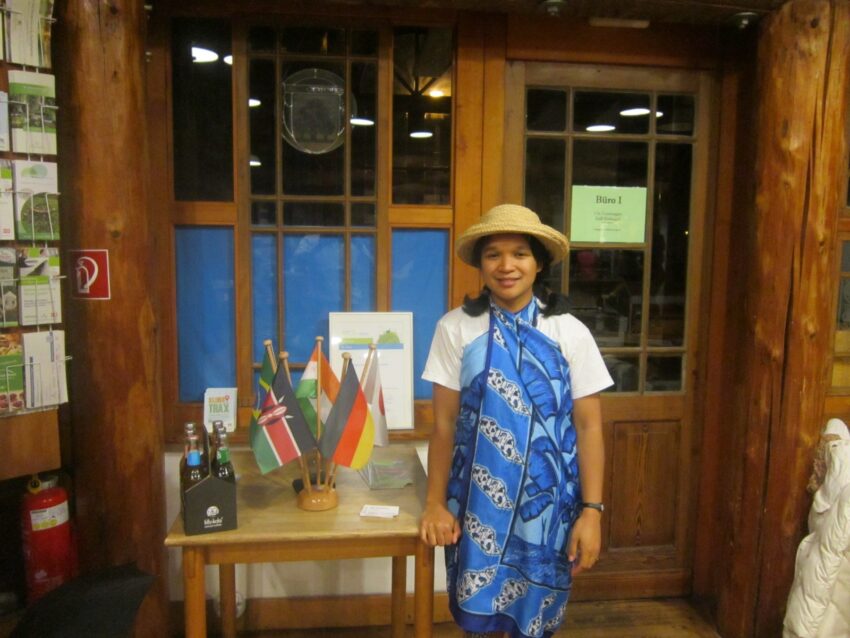
Sophie wearing a daily Malagasy woman outfit during an intercultural evening in Freiburg, Germany.
Today our spotlight shines on Sophie Randriamahefasoa, whose expertise in statistical analysis and data visualisation have contributed to the goals of Elemental’s Work Package 6, which works collaboratively with all other Hub Work Packages to find sustainable solutions for the environmental impacts of metal extraction. Using Techno Economic Analysis (TEA) and Life Cycle Assessment (LCA), WP6 creates mass and energy flow balance diagrams to understand the whole system of metal processing and to provide positive solutions for the environmental and economic impact.
Please introduce yourself!
I am Sophie Randriamahefasoa, a Research Fellow in Life Cycle Assessment and Engineering Biology at the University of Surrey. My job focuses on measuring the environmental impacts of metal processing using biotechnology.
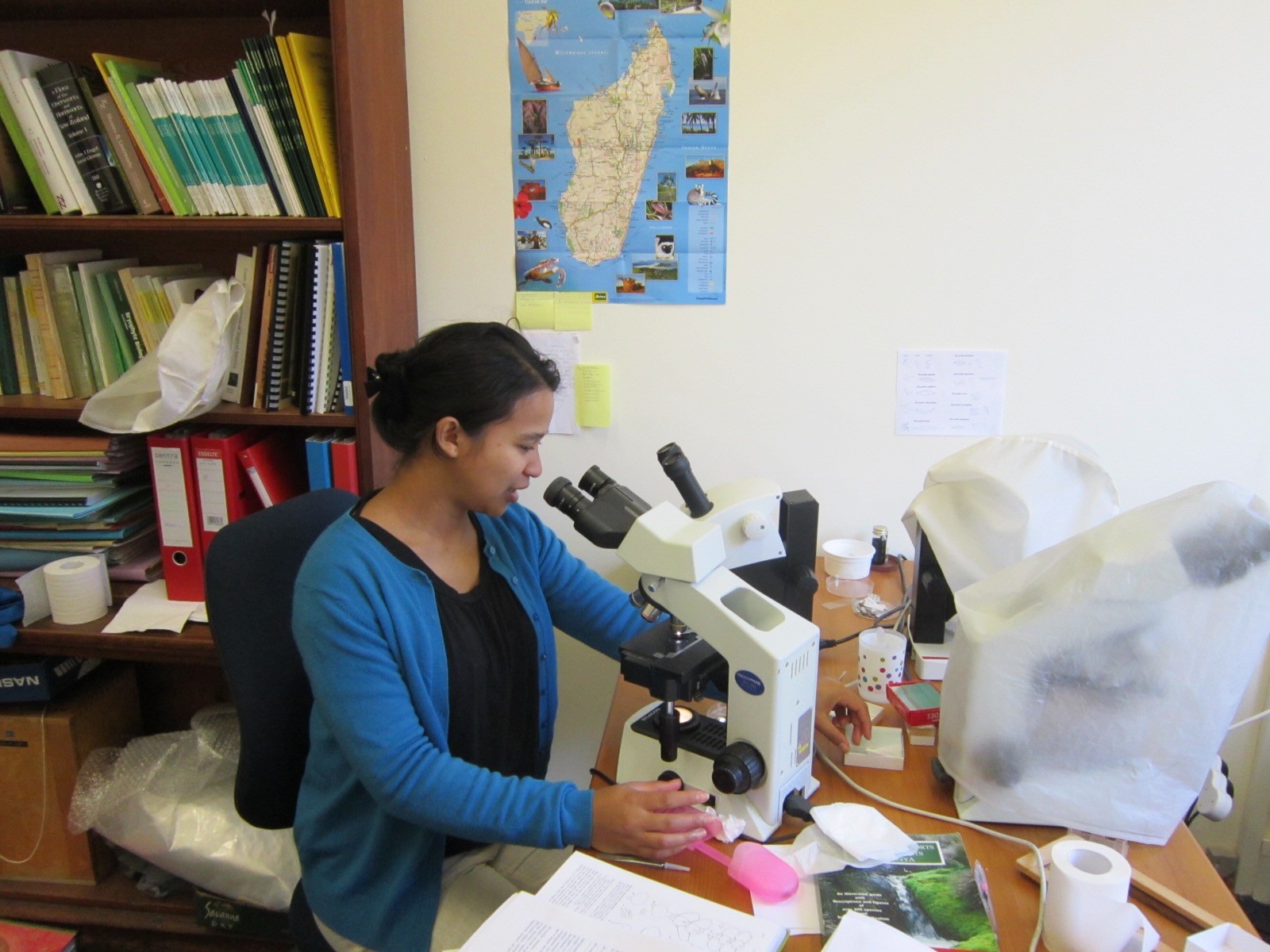
My first time observing images with a microscope at the Department of Botany, University of Cape Town, South Africa.
Please tell us what first inspired you to work in environmental biotechnology or metal bioprocessing?
I always want to apply my expertise in mathematics and data science to work that addresses real world challenges. This has led me to choose climate studies and environmental protection, where analytical methods can help to solve global issues. Being conscious of the environmental damages caused by human activities, I am especially interested in developing techniques and tools that reduce environmental impact and support more sustainable decision-making.
Can you briefly describe your current research and how it contributes to the Hub’s mission of sustainable metal recovery, circular economy, or biosensing?
Based on existing tools, including LCA software and background life cycle inventory data, my current research aims to measure the environmental impacts of metal processing at laboratory scale. This involves quantifying the impact indicators such as global warming potential, terrestrial ecotoxicity, and other emissions to the biosphere.
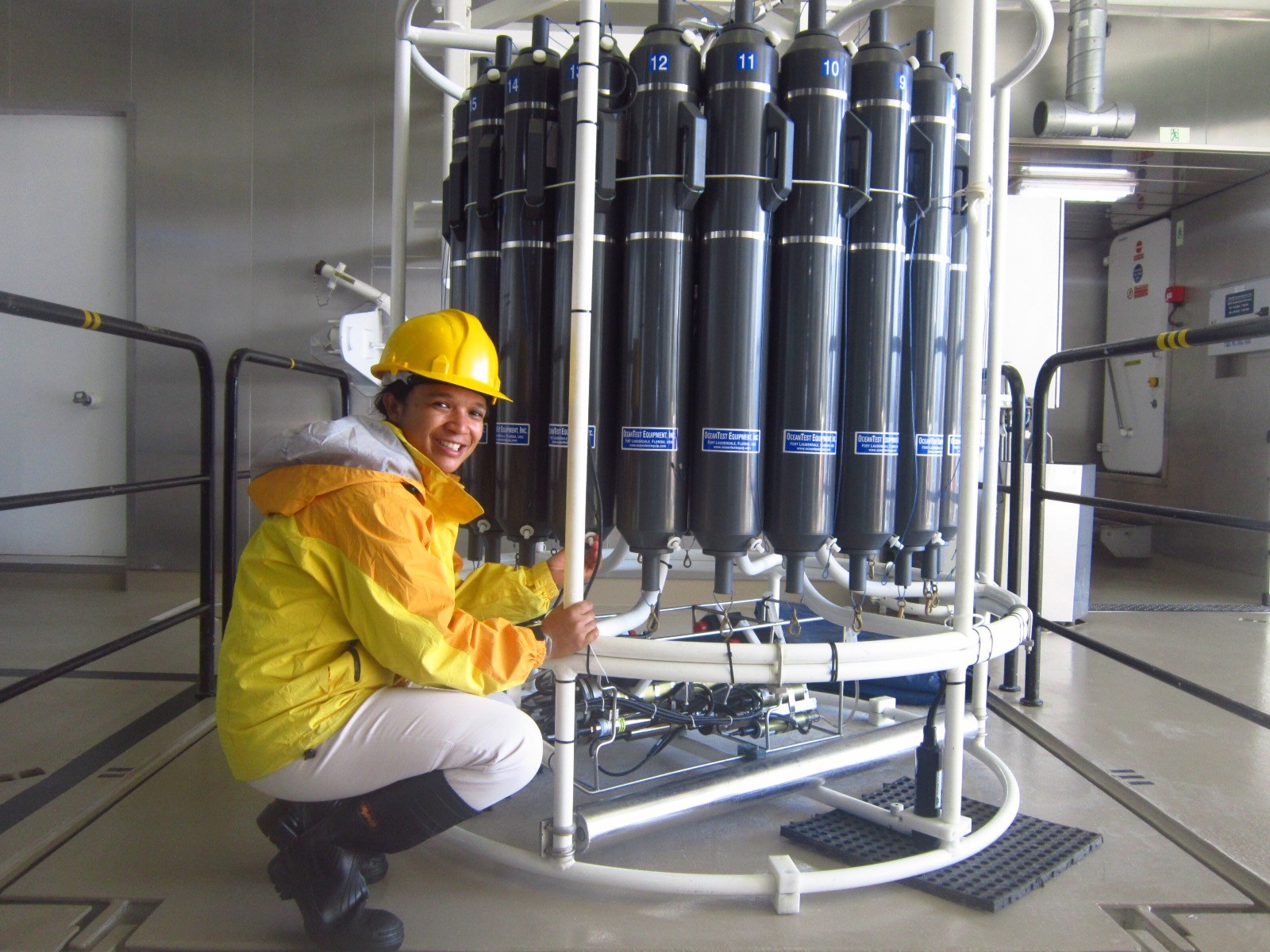
Collecting ocean samples during the 2nd International Indian Ocean Expedition on board the Research Vessel S.A Agulhas II.
What excites you most about working in the field of engineering biology for environmental impact?
It’s exciting to talk about my work to anyone, outside the field, friends and family. People get fascinated learning that there are more environmentally friendly methods for recycling all the waste that humans are producing. I’m also excited about the perspective that engineering biology could be adopted in a scale that will truly make a difference for protecting our environment and more techniques are developed to achieve that purpose.
How has being part of the ELEMENTAL Hub influenced your work or expanded your horizons?
The UK-US research collaboration travel grant was a great opportunity for me to connect, for the first time, with scientific experts in the American continent. Being part of the ELEMENTAL Hub made such a unique experience possible. It was a great chance to expand my professional and personal network across the Atlantic.
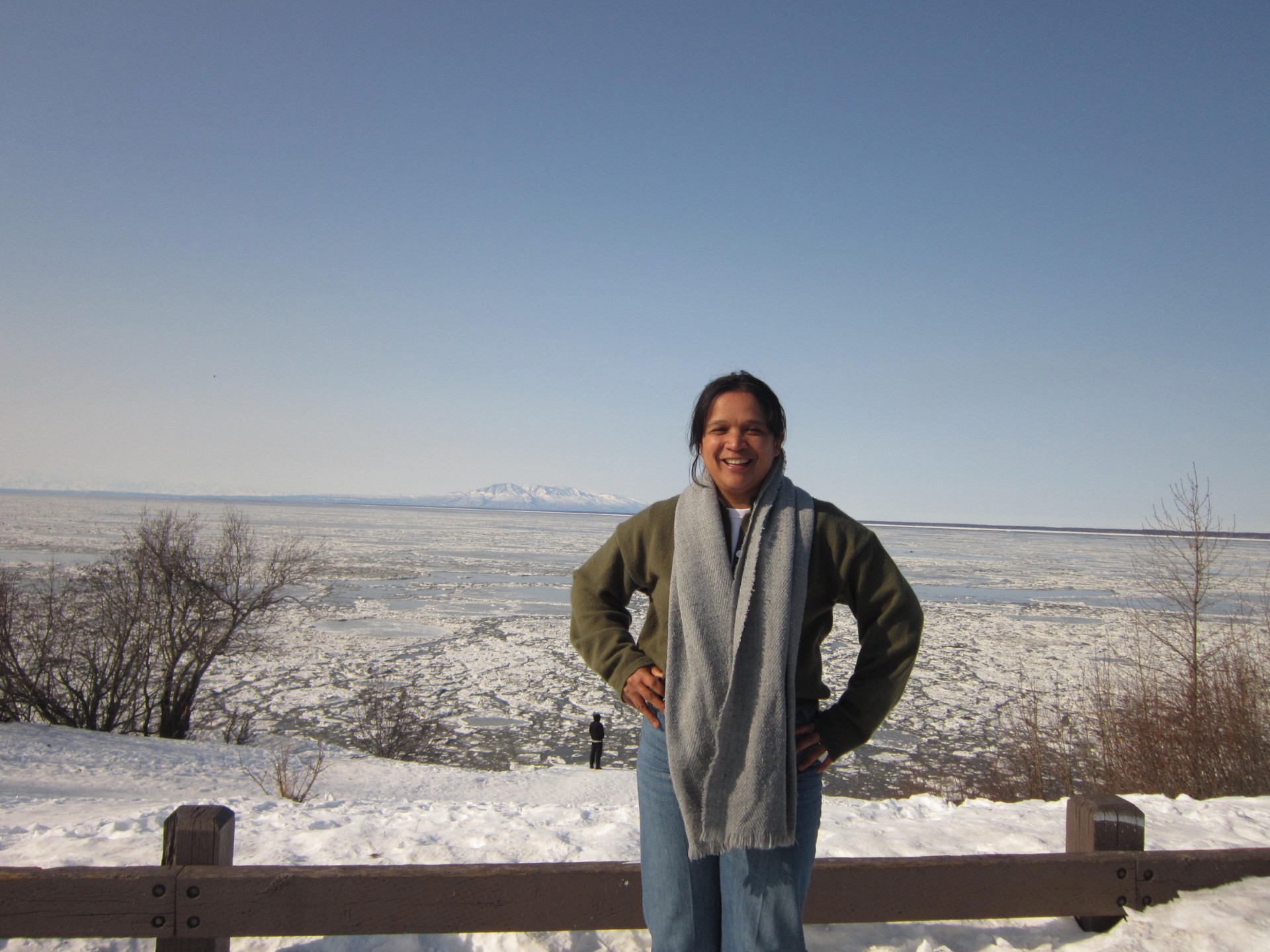
Recent visit to Alaska for the UK-US Research collaboration in critical Minerals.
Are there any standout collaborations or opportunities you’ve experienced through the Hub?
My research visit to Alaska in 2026 was my first collaboration with a university in the United States. Being part of the ELEMENTAL Hub made this valuable opportunity possible. It was an unforgettable experience, both through the research collaboration and a visit to the Alaska Wildlife Conservation Center with my host.
The visit gave me direct experience of life at an American university and its distinct academic environment. I particularly valued the diversity among my academic partners, including their areas of expertise, cultures, values, and locations.
Could you share a recent achievement or milestone that you’re proud to highlight?
Receiving the travel grant award from the Foreign Commonwealth and Development Office (FCDO) was an achievement through my work with the Hub. I contributed to the development of Research partnership in Critical Minerals with the biggest university in Alaska. Building the research collaboration between the University of Surrey and the University of Alaska, Anchorage, was a successful networking experience for me. Also, it was an extension of my academic community for a long-term research partnership.
What challenges have you encountered in your work, and how have you overcome them?
Accessing reliable data has been a key challenge in my work. Both laboratory data and LCA databases are essential to my research. To obtain the data on time, I initiated a collaboration with another work package focused on chemistry and laboratory experiments.
I regularly follow up with collaborators who have direct access to the experimental data. These discussions have helped me understand their challenges, support the data collection process, and become more familiar with the flow of their experiments. This has also helped us together to develop a shared understanding of our joint work.
What’s one key insight or learning you’ve gained through your research or participation in the Hub?
The hub has a multidisciplinary research group. I had the opportunity to build my knowledge in biomining, for the first time, as I needed to know it for accomplishing my research on Life Cycle Assessment. It’s a privilege to be part of the Hub by interacting with microbiologists and chemists. By taking part in the Hub project, I enjoy experiencing the interconnection of all the research work for one important purpose which is looking at the best way to protect our environment when extracting metals.
What drives you in your day-to-day research?
While my own work is heavy on data manipulation, statistics and programming, it inspires me to learn more about the application side of the work. I like to discuss my work with people across different backgrounds and being able to explain what I am doing without using complicated scientific terms.
What are your hopes or predictions for the future of the ELEMENTAL Hub or the field of environmental biotechnology?
The Hub members will continue to promote environmentally responsible approaches to recycle and to recover precious metals. Advancing biotechnology could make a significant contribution to protecting the environment. In the future, these methods could also be applied across different industrial scales: smaller or larger scale.
Share one fun or unexpected thing about yourself that few people know.
Singing and dancing would be one fun unexpected thing that few people know about me. I love sharing my vibrant and joyful culture back home in Madagascar by singing and simply dancing with my friends. I do sing and move my body when there is an occasion or an emotion I experience. I also love to bake!

My Award winning cake at the School of Engineering, University of Surrey, during the celebration of Women’s Day 2026.
If your work had a “superpower,” what would it be and why?
My work acts like a magic mirror. You can ask a question, such as how changing one step in the extraction process might affect a specific part of the environment, and it will help you to visualise the possible impact. As you improve your process, you can ask again to visualise how the outcome has changed.