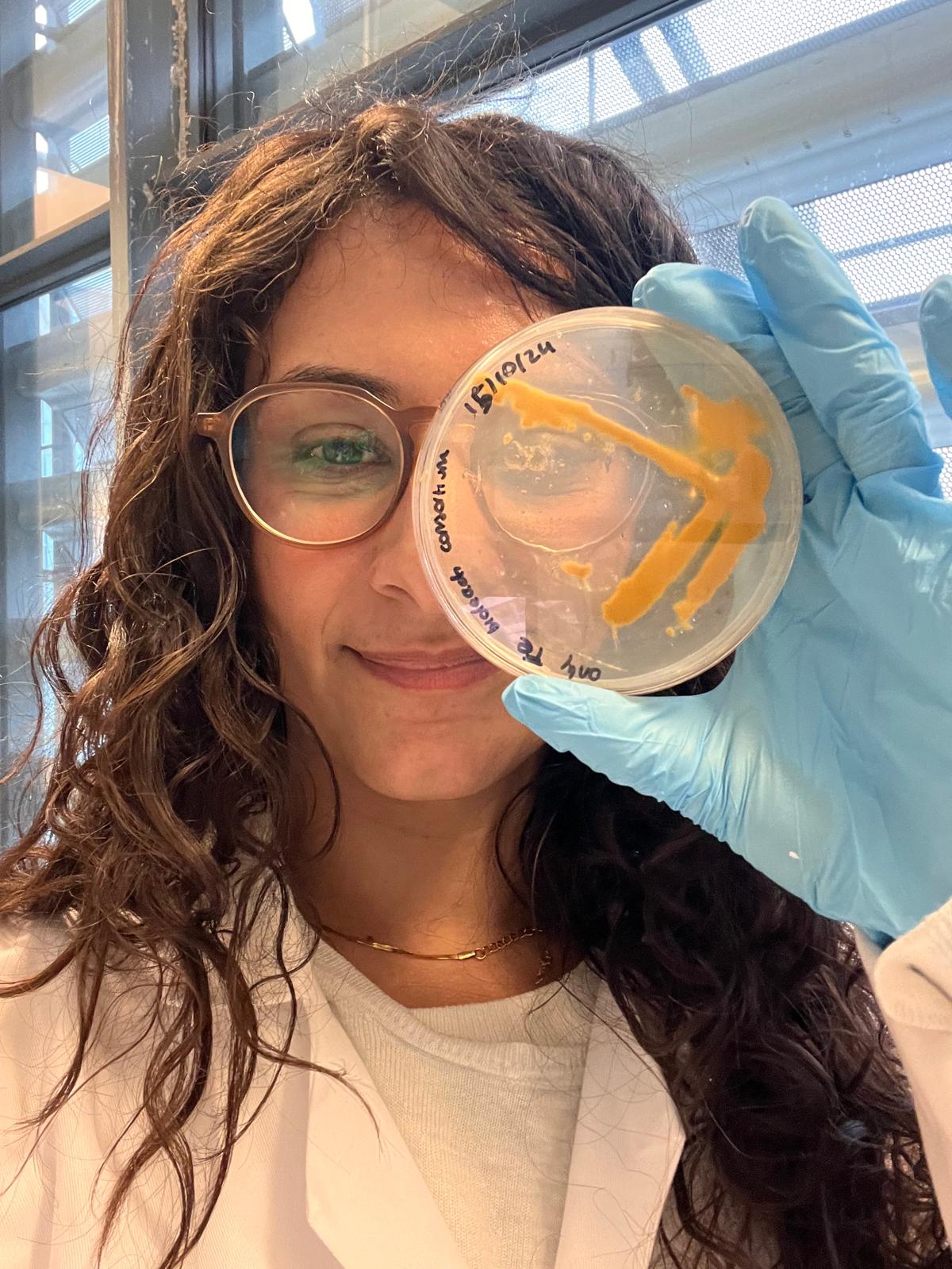
As a Post-doctoral research fellow for the ELEMENTAL Mission Hub, Dr Maria Magliulo's research at the Natural History Museum (London) focuses on how acidophiles--microbes living in acidic environments--may enable responsible, sustainable mining practices.
Today we shine our spotlight on Dr Maria Magliulo, a post-doctoral research associate working at the Natural History Museum with Dr Ana Santos (Bioleaching Work Package lead). Maria is interested in ‘Acidophiles’ (microbes living in acidic environments) that have been transforming the Earth’s geochemistry for 3.4 billion years. These extreme ecosystems host a wide array of microorganisms with specialized functions, including metal solubilization, acid tolerance, and biofilm formation—traits highly relevant to bioengineering applications. Her research specifically explores the 16S rRNA microbial diversity in naturally occurring bioleaching consortia and mine waste environments.
Maria’s project supports ELEMENTAL’s commitment to mining sustainability. She believes engineering biology is key to understanding how microbial interactions can improve our understanding of microbial adaptation and interspecies interactions in extreme environments. She won an award for her presentation “Exploring microbial diversity in mine waste: a roadmap for bioengineering technologies” on the biotechnological potential of Acidophiles to survive and contribute to metal solubilization under acidic conditions at the EBIC ECR Conference (Edinburgh, July 2025).
Q: To start, could you introduce yourself and tell us about your role or focus within the ELEMENTAL Hub?
Hi 😊 my name is Maria, and I am a postdoctoral researcher with a background in Microbiology working at the Natural History Museum in London. My research focuses on using genetic engineering to improve the bioleaching abilities of acidophilic microbes.
I’ve always been fascinated by the phenomenon of life: how did it all start?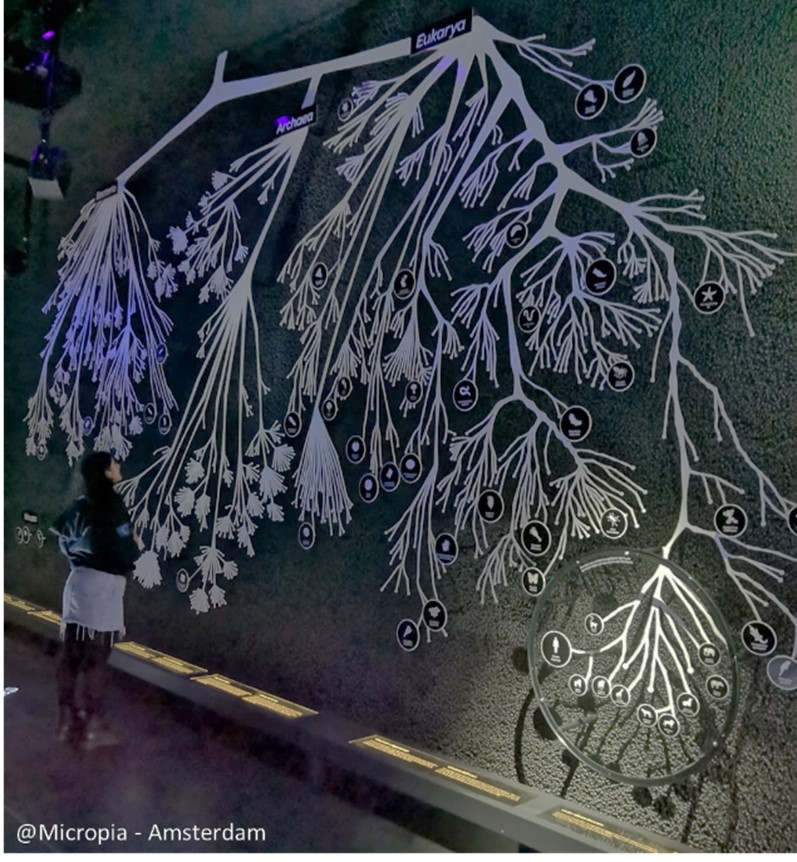
My personal journey started with a BSc in Molecular Biology. Intrigued by the highly diversified phenotypic traits of life on Earth, I soon realised that to capture the essence of evolution I would have needed to “zoom out” from this molecular perspective, so I improved my studies with an MSc in Ecology.
This led me to undertake a PhD in Microbiology. A choice mainly based on three counts: microbes are the first life form to have originated, they are involved in biogeochemical cycles, and they are inhabitants of extreme environments. Microbes know precisely how to deal with chemistry, they can meld elements together or break them apart.
Q: What first inspired you to work in environmental biotechnology or metal bioprocessing?
Microbes have been defined as the bioengineers of life on Earth, owing to their extraordinary metabolic diversity and their central role at the interface between biology and geochemistry. Since the origin of life, they have continuously reshaped the chemistry of our planet: through their activities, they made our planet habitable.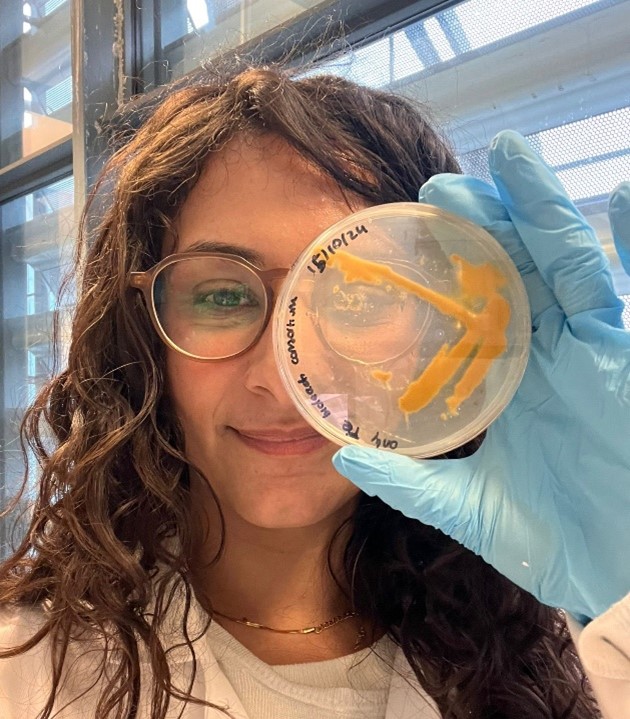
This perspective aligns closely with the aims of my project within ELEMENTAL. I have the opportunity not only to deepen our understanding of how acidophilic microbes interact with sulfide minerals releasing precious metals, but also how to enhance the process using genetic engineering.
The goal is to develop technologies for bioprocessing waste and recovering valuable elements such as (but not limited to) copper. In this way, what is discarded by some can become a resource for others!
Q: Please briefly describe your current research and how it contributes to the Hub’s mission?
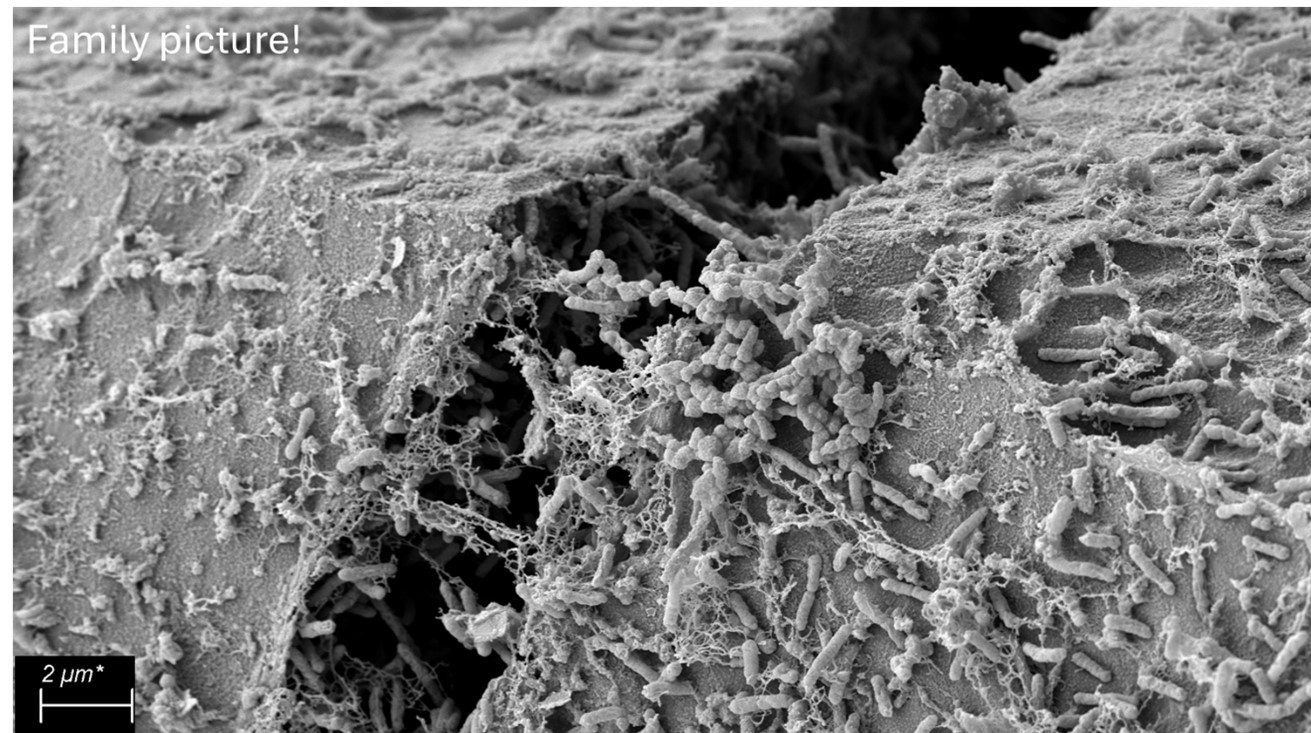
I study a naturally occurring bioleaching microbial consortium, dominated by three key species widely used in bioleaching operations. My work explores their physiological activity and resilience under stress, with a particular focus on Acidithiobacillus ferrooxidans, the key species in bioleaching. Its ability to form complex biofilm on sulfide minerals may reveal what drives biofilm formation and how we might enhance it to improve resilience and increasing mineral-microbe contact to level up bioleaching efficiency.
Q: How has being part of the ELEMENTAL Hub (or other partnerships like mission hubs or UKRI collaborations) influenced your work or expanded your horizons?
The Hub is a unique environment that fosters growth and collaboration among enthusiastic scientists with different expertise. It’s easy to find common ground, as we all share the same goal: rethinking how metals are extracted, recovered, sensed and remediated in more sustainable ways. Participating in several ELEMENTAL meetings has broadened my understanding of the project, connected me with other hubs (e.g. EBIC) and led to the establishment of active collaborations.
Q: Please share a recent achievement or milestone that you’re proud to highlight?
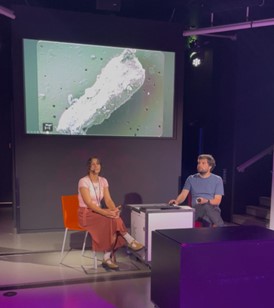
I’m part of a program run by the Natural History Museum called “Meet the Scientist”, where students can meet and ask questions of scientists and learn more about what goes on behind the scenes at the Museum.
For this series of events, I have written a spoken word poem about microbes, which is then followed by an interview where students can ask questions about the scientist’s research and careers in science. I love these types of events! They help me to get creative about different ways to deliver the science we do. There will be another one coming up on the 8th of April!
Q: What challenges have you encountered in your work? What insights or learning have you gained through your participation in the Hub?
Trying to genetically modify Acidithiobacillus ferrooxidans has proved to be a big challenge: it doesn’t like to receive plasmids, it has ways (through Quorum Sensing mechanisms) to grow despite the presence of specific antibiotics, it grows at quite low pH, it doesn’t produce a lot of biomass, and its iron-based metabolism makes classic cell measurement techniques not ideal. The good thing is that we have a plan to address each of these challenges. Discussing these problems within the Hub has paved the way for alternative ways to address these challenges and overcome them.
Q: What drives you, and what are your hopes or predictions for the future of the ELEMENTAL Hub or the field of environmental biotechnology?
I am an enthusiastic microbiologist, and I am quite confident that microbes hold the key to addressing some key challenges of the future. Many of the most transformative advances shaping modern society, like PCR, a technique used as the “gold standard” for diagnosing COVID-19 infection during the pandemic, and CRISPR-based genome editing and its great potential, originate from microbiology. Yet, these breakthroughs arise from studying only a small fraction (some say 1%!) of the microbial world, with the vast majority of microorganisms still unexplored. This untapped diversity represents a frontier of discovery, positioning microbiology as a key driver of future innovations, especially in the field of environmental biotechnology.
Q: Please share something fun or unexpected about yourself that few people know.
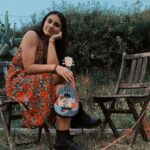
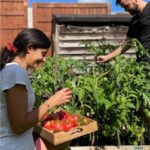
In my free time, I enjoy playing the piano and the ukulele (little side note: I am particularly fond of classical Neapolitan music). I’ve been training in martial arts for two years now, and it’s my favourite way to unwind and slow down the fast-paced London life. When I can’t do that, I find the calm and tranquillity of my garden and grow my own vegetables. This spring I’m growing more seeds than ever so I’m looking very forward to the harvesting season! I am deeply drawn to the sea; whenever possible I make time for a dive!